A Manuscript to Audiobook Workflow That Holds Up
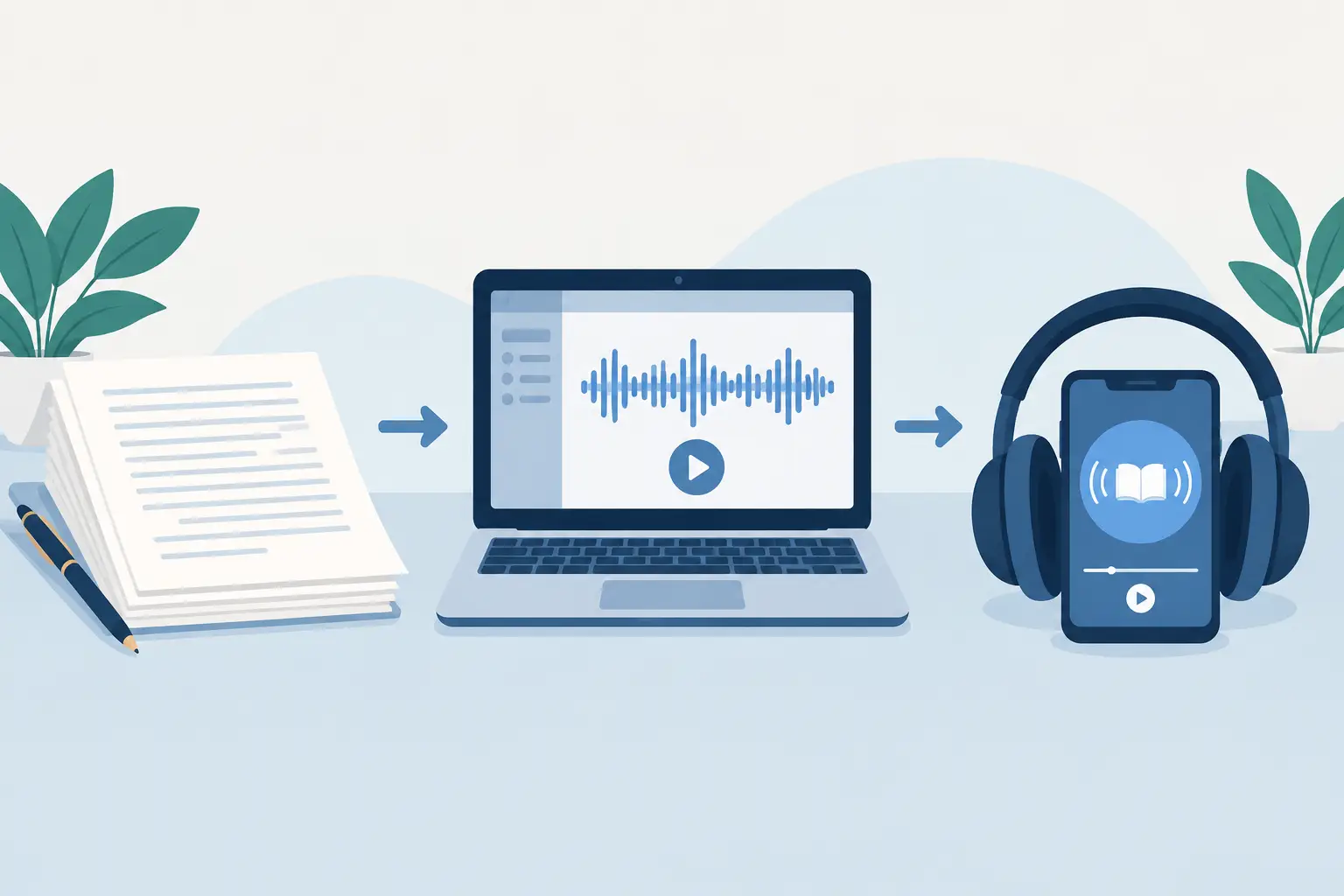
A finished manuscript is not automatically ready for audio. The manuscript to audiobook workflow begins when you decide what a listener should hear, not when a voice starts reading. That distinction protects the work. It gives authors and publishing teams control over pacing, pronunciation, character identity, chapter transitions, and the level of production that serves the book rather than distracting from it.
For independent publishers, the goal is not to turn a document into hours of sound as quickly as possible. The goal is to produce an audiobook that feels intentional beside the print and ebook editions - credible in a retailer catalog, comfortable to hear for long sessions, and faithful to the author’s creative decisions.
Start With a Locked, Format-Ready Manuscript
Audio production exposes manuscript problems that can slip through print. Repeated words, unclear dialogue tags, inconsistent character names, missing scene breaks, and awkward transitions become obvious when heard aloud. A manuscript that is technically complete may still need an audio-readiness pass.
Lock the editorial text before serious audiobook work begins. This does not mean no correction can ever be made afterward. It means the production team needs a stable source of truth. If chapters are being rewritten while narration is underway, every change can trigger new script preparation, revised performance, editing, mixing, and quality review.
This is why a connected publishing workflow matters. The manuscript used for layout, print-ready PDF creation, validated EPUB export, and audio preparation should be traceable to the same approved text. Authors should not have to wonder whether the audiobook reflects a different draft from the one sold in ebook stores.
Before moving forward, review front matter and back matter as well. Decide what belongs in the recording: title page information, copyright language, dedication, epigraphs, acknowledgments, author notes, reading-group questions, and series previews. Not every printed element needs to be narrated. A lengthy legal page rarely helps a listener, while a brief author note may add real value.
Turn the Book Into an Editable Production Script
A book manuscript is written for readers. A production script is prepared for performance and post-production.
The script should preserve chapter structure while identifying elements that need a decision before narration begins. These include pronunciation notes, foreign-language phrases, initials, dates, text messages, letters, poems, footnotes, tables, visual callouts, and any material that cannot simply be read verbatim without confusing the listener.
For nonfiction, this stage is often where the most judgment is required. A printed table may need to become a short spoken explanation. A web address might be omitted, simplified, or moved to a companion resource. Citations can be handled selectively based on audience expectations and the book’s purpose. The right answer depends on the genre, but the decision should be made in the script, not improvised during recording.
Fiction has its own pressure points. Dialogue needs clean attribution. Scene changes must be understandable without relying on extra white space. Character names and invented places need a pronunciation guide. If a series has established pronunciations or returning character voices, document them now. Consistency across a backlist is part of the listener experience.
An editable production script also gives the author a practical review point. It is the moment to catch whether a passage needs adaptation for the ear, without reopening the entire manuscript or leaving creative choices to a generic conversion system.
Cast for the Book, Not for a Generic Voice
Casting is one of the highest-leverage decisions in audiobook production. The narrator is not a decorative layer applied after the writing is complete. Their performance determines how the book’s authority, humor, tension, intimacy, and emotional range reach the listener.
Start with the book’s narrative requirements. Is it a single close point of view, a multi-POV novel, a memoir told in the author’s own voice, or a business title that needs measured credibility? Does the material call for one primary narrator, dual narration, a full cast, or supporting character voices within a single performance?
A strong casting brief goes beyond age and accent. It describes pace, emotional temperature, genre expectations, character relationships, and vocal boundaries. For a thriller, the right performance may be restrained and precise rather than theatrical. For romantic comedy, timing and tonal agility may matter more than dramatic intensity. For memoir, listeners often expect intimacy and authenticity, but that does not automatically mean the author should narrate.
The author should remain involved in casting decisions. Approval does not require micromanaging every line read. It means the person who understands the book’s intent has a defined role in choosing the voices that will carry it.
Record and Direct With Continuity in Mind
Whether narration is captured through human performance, a controlled voice-production system, or a hybrid approach, continuity is the standard. A character cannot sound one way in Chapter 2 and another way in Chapter 19 because the production lost track of the reference. Names, emotional arcs, accents, and pacing need documented direction.
This is where simple text-to-speech conversion falls short for commercial work. Generating spoken words is not the same as producing an audiobook. An audiobook requires choices about performance, retakes, pacing, chapter rhythm, and the moments when silence carries more weight than sound.
Build review checkpoints into recording rather than saving all feedback for the end. Early sample chapters can confirm the narrator’s approach, pronunciation rules, and character treatment. Once the voice direction is approved, production can move forward with fewer expensive corrections.
For books with multiple narrators or a series timeline, maintain a production bible. It should contain pronunciations, voice references, character notes, recurring terminology, and any approved decisions that need to survive into future titles. This may feel like extra work on the first book. On the third or tenth, it becomes an asset that protects quality and production speed.
Use Sound Design With Restraint
Cinematic audio does not mean adding music under every paragraph. Sound design should reinforce the story’s world and movement without competing with the narration.
Selective ambience can establish a location, support a transition, or give a dramatic moment more physical presence. A brief room tone, distant weather, a closing door, or a controlled musical cue can be effective when it has a narrative job. Constant effects often create the opposite result: fatigue, distraction, and a production that dates quickly.
Genre sets the boundary. Speculative fiction, horror, thrillers, and some children’s titles may support more designed audio. A practical nonfiction guide may need little beyond clean narration and chapter structure. The test is simple: if removing an effect makes the listening experience clearer, the effect was probably not earning its place.
Edit, Mix, and Master for Long-Form Listening
The most impressive narration can still fail if the audio is poorly finished. Editing removes mistakes, unwanted noise, awkward pauses, and performance inconsistencies. Mixing balances narration with any approved music or ambience. Mastering brings every chapter into a consistent, platform-appropriate listening range.
Listeners notice uneven loudness immediately. They also notice harsh sibilance, audible breaths left in the wrong places, abrupt edits, mismatched room tone, and chapters that begin or end without clean spacing. These details affect reviews because they affect trust. A listener may not name the technical issue, but they know when a book feels amateurish.
Quality control should include more than waveform checks. Someone needs to listen for misreads, missing sentences, wrong character names, repeated lines, and script deviations. Review the opening and closing of every chapter, transitions between narrators, and any section with music or sound effects. For a long audiobook, targeted listening plus structured checks is often more reliable than assuming a single pass will catch everything.
Package the Audiobook for Retailers
The final deliverable is not one giant audio file. Retail-ready audiobook production requires properly segmented chapters, consistent naming, embedded metadata where required, cover assets sized for audio storefronts, and files that meet the technical expectations of the intended distribution channels.
Packaging should match the edition strategy for the book. Confirm the title, subtitle, author name, narrator credits, series data, and description before delivery. A metadata mismatch can create confusion across formats and make a professionally produced audiobook look disconnected from its print and ebook counterparts.
A platform such as Orpheus is designed around this full production path: manuscript-to-script preparation, casting, controlled creative review, sound treatment, mastering, and retailer packaging. The value is not automation for its own sake. It is keeping production decisions visible and manageable for the people responsible for the book.
Build a Workflow You Can Repeat
A single audiobook can be managed through determination and a spreadsheet. A catalog needs a system. Establish approval stages for script, casting, sample audio, final master, and retailer package. Keep version history, pronunciation references, and character notes in one accessible place. Set a policy for manuscript changes after production begins, including who approves them and what constitutes a paid rework.
The practical benefit is not only faster release schedules. A repeatable process preserves creative control as your publishing operation grows. It lets a small press manage several titles without losing track of decisions, and it lets a series author maintain a recognizable audio identity from book to book.
Treat the finished manuscript as the beginning of audio production, not the end of publishing. When the script is prepared, the voices are chosen with purpose, and the final files are mastered for real listeners, the audiobook becomes a durable edition of the work - one that earns its place beside every other format you publish.
Last updated September 25, 2026
← All posts