Audiobook Sound Effects: A Guide for Authors
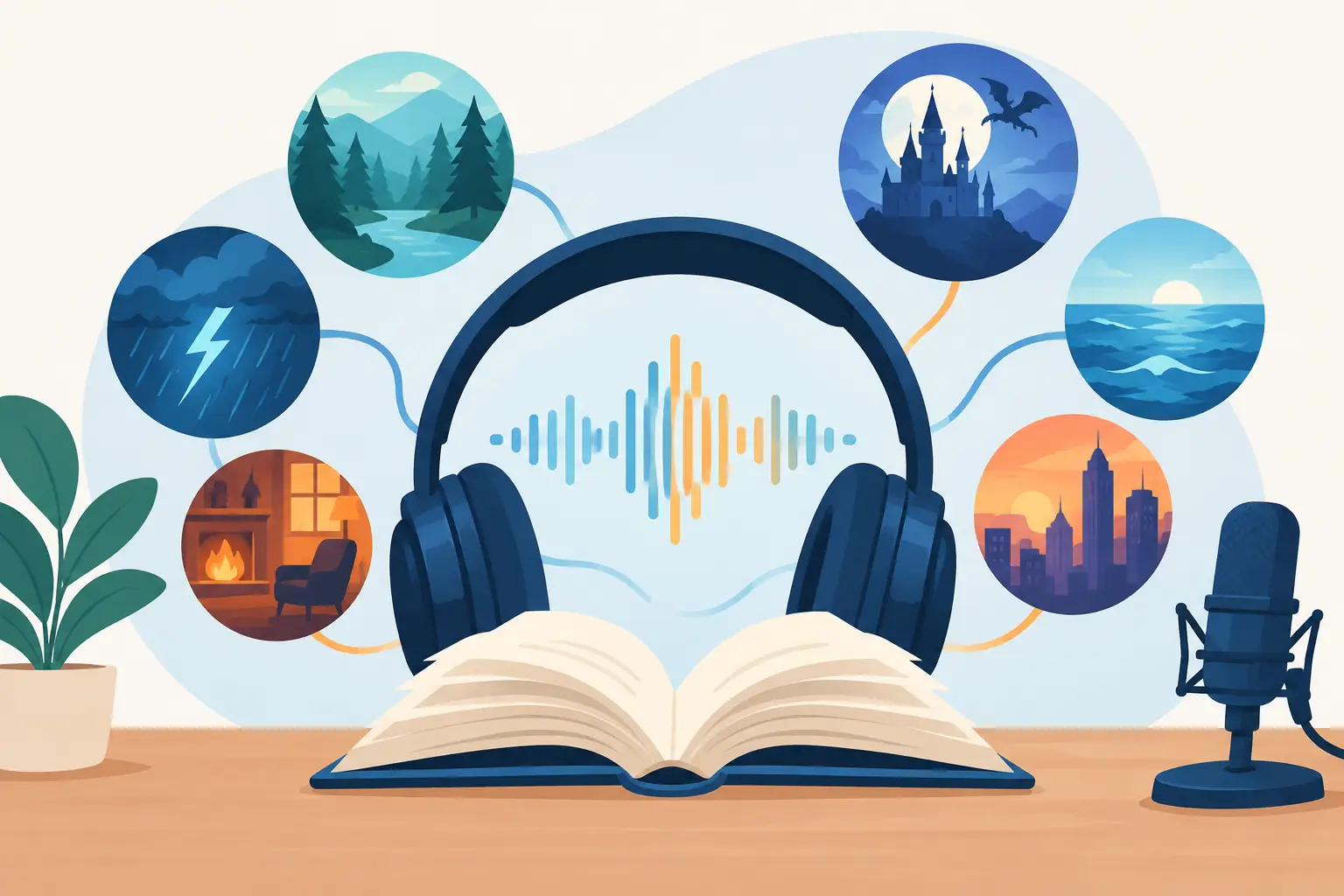
A train door slides shut. A key turns in a lock. Rain taps at a window while a character decides whether to answer the phone. Sound effects like these can make a listener feel present inside a scene. Used without discipline, they can also pull attention away from the narrator, obscure dialogue, and make your novel feel like a radio drama it was never written to be.
Your goal is not to add noise to every page. It is to make deliberate choices that protect your manuscript's voice while giving selected moments more physical presence. The best effects are often the ones listeners barely notice because they arrive at the exact moment the story asks for them.
What should sound effects actually do?
Sound effects are storytelling cues, not decoration. A carefully placed effect can establish location, signal a transition, sharpen an action, or create emotional tension before the narrator names it. A distant siren can make a city scene feel exposed. One creaking floorboard can heighten a suspense sequence. The absence of sound after a loud event can be just as effective.
That does not mean every genre needs the same approach. A fast-paced thriller may benefit from restrained environmental cues at chapter openings and high-stakes actions. A fantasy novel may use recurring sounds to distinguish a magical object, creature, or setting. Literary fiction may call for almost no effects at all, leaving cadence, silence, and performance to carry the atmosphere. Let your book's own narrative contract with the reader guide the decision.
An audiobook is still primarily a narrated work. If an effect competes with a line the listener needs to understand, it has failed. If it changes the tone of a scene from intimate to theatrical without your intent, it has failed there too.
Decide the format before you choose a single sound
The term "enhanced audiobook" covers several very different productions. Clarifying the format you want early prevents expensive revisions later.
A lightly enhanced audiobook uses occasional effects, usually for scene changes, environmental context, or important actions. This is the most flexible option for many novels because it preserves a traditional listening experience while adding texture where it matters.
A cinematic audiobook may layer ambiences, effects, transitions, and music under narration more consistently. It can be compelling, but it needs careful mixing and a sound plan established before recording. The more layers a production has, the more opportunities there are for pacing problems, rights issues, and inconsistent audio.
A full-cast audio drama is a different product. It may adapt narration into dialogue, use multiple actors, and place effects continuously through scenes. That can be a strong creative choice, but it is not simply an audiobook with extra sound. It requires adaptation decisions that can change how your manuscript is experienced.
Choose the version that matches your budget, audience expectations, distribution goals, and creative intent. Approve that decision before narration begins, not after a producer has built a sound-heavy mix around the first chapters.
How do I build a sound map from my manuscript?
A sound map turns broad creative instinct into an editable production plan. Read your manuscript with headphones in mind and mark only the moments where sound can add information the narration does not already provide.
Start by identifying recurring locations, objects, and transitions. A harbor town may have gulls, rigging, water against pilings, and distant engines, but that does not mean all four belong in every chapter. Choose a small palette that helps listeners recognize the setting without turning it into wallpaper. A recurring sound should have a purpose: orientation, mood, or story meaning.
Then identify action cues. These are moments such as a door slamming, a glass breaking, a sword leaving its sheath, or a text message arriving. Ask a practical question: does the narrator's performance and wording already communicate this clearly? If yes, the effect may be redundant. If no, a brief cue can make the action immediate.
Finally, mark emotional pivots. These deserve the most caution. Sound can support a panic attack, a memory, or a looming threat, but it should not instruct the listener what to feel. A low rumble beneath every tense conversation becomes manipulation. One subtle, purposeful sonic shift at the right point is more powerful.
Keep the cue sheet specific
Each approved cue should record the chapter, approximate timestamp or line of text, the intended sound, its narrative purpose, and who has final approval. Include notes such as "distant, not foreground," "fade before dialogue," or "same antique clock as Chapter 2." These details protect continuity as the work moves between narrator, editor, and audio engineer.
A cue sheet also creates a useful boundary. If a proposed effect is not on the map, review it before it enters the mix. Nothing should enter your finished production simply because a sound library made it easy to add.
How do I choose sounds that feel real in the scene?
A technically clean sound can still be the wrong sound. A modern car lock, for example, can quietly break the period setting of a historical novel. A large cathedral reverb on a small apartment hallway can make a scene feel unintentionally artificial.
Prioritize perspective. What would the character hear from where they are standing? A thunderclap outside a sealed office should sound different from thunder heard on an open field. Footsteps behind a closed door should be muffled. A phone ringing across a room should not sound like it is pressed to the listener's ear.
Original recordings can give your book a distinctive identity, especially for signature sounds. Stock and licensed libraries are often more efficient for common effects, provided you confirm the license covers commercial audiobook distribution and any planned promotional uses. Keep records of every source, license, and edited file version. Audio rights are production assets, not an afterthought.
How should I mix sound effects around narration?
Narration is the anchor. Effects belong around it, beneath it, or in the intentional silence between lines. They should not force listeners to adjust volume from chapter to chapter.
Start conservative. Set ambient tracks low enough that they are felt more than consciously heard, then test them under the narrator's quietest lines. Short effects need room to breathe, but their peak volume should not leap beyond the natural energy of the performance. Harsh high frequencies are especially tiring over headphones, while heavy low-end effects can muddy a narrator's voice.
Do not use the same treatment for every device. Test the production on studio headphones, ordinary earbuds, a phone speaker, a car system, and a smart speaker. A rain bed that feels subtle on monitors may turn dialogue into mush on a phone. A delicate knocking cue may vanish in a car. The right mix is the one that protects the story across normal listening conditions, not just in the editing suite.
Let silence do some of the work
Silence creates contrast, expectation, and space for a performance to land. If a scene ends with a gunshot, the most effective follow-up may be no music and no ambient sound at all. If a narrator pauses before a revelation, resist filling that space merely because the track feels empty on a timeline.
This is where author approval matters most. A pause is part of the writing and the performance. Treat it as an intentional asset.
What should I check in review?
The first review should check story alignment. Are effects reinforcing the setting, action, and emotional tone established in the manuscript? Do recurring sounds stay consistent? Has a cue accidentally revealed an event before the narrator does?
The second review should focus on technical quality. Listen for abrupt edits, loops that become obvious, clipping, unwanted hiss, mismatched room tone, and effects that mask consonants in dialogue. Review chapter starts and endings closely, where transitions often feel most noticeable.
A short listener test can be revealing. Give a few trusted listeners a chapter without explaining the sound design choices. Ask where they felt pulled out of the story, what they could not hear clearly, and whether any moment felt confusing. Their answers are more useful than asking whether they "liked" the effects.
A connected workflow helps here. When your manuscript, character notes, approved voices, and production assets live in one place, it is easier to check that the sound of a recurring setting still matches the text. Orpheus can support that handoff from manuscript to finished audiobook while keeping final creative decisions with you.
When should I leave the effect out?
The strongest sound design choice is often restraint. Skip an effect when the prose already carries the action with precision, when the sound would make an intimate scene feel overproduced, or when it creates a continuity question your book does not answer. Do not add a crowd because a scene is set at a party if the narrative needs the listener focused on one private conversation.
A final rule is useful: if removing a sound changes nothing about comprehension, atmosphere, or emotional movement, remove it. Your listener should come away remembering the scene, the character, and the voice of the book, not the sound library behind it.
Treat every cue as a choice on behalf of the story. Approve it, place it with care, and leave space for the listener's imagination to finish the scene.
最后更新于 十一月 19, 2026
← 所有文章