How to Produce a Professional Audiobook for Your Book
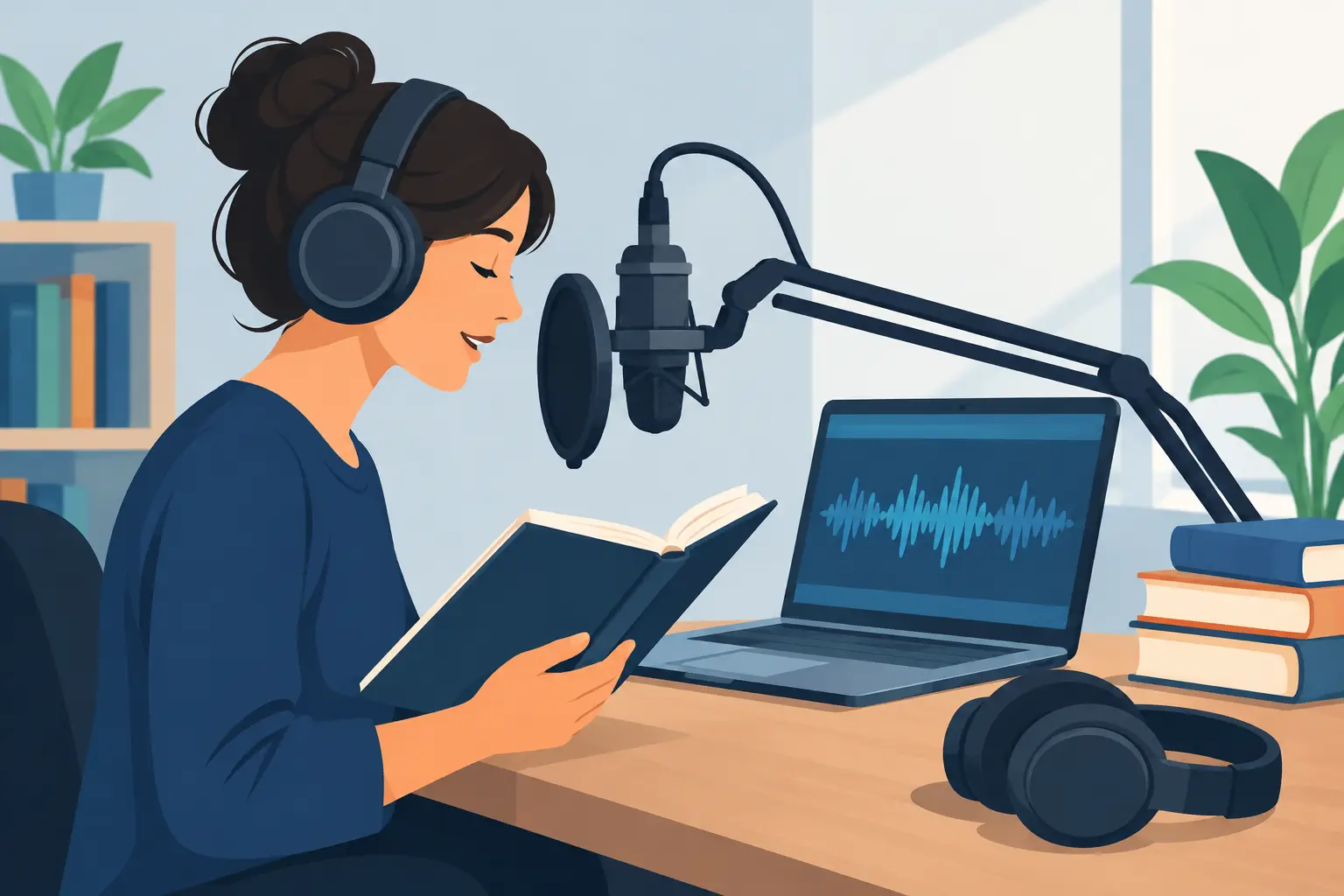
A professional audiobook is not a manuscript read aloud. It needs a prepared script, a narrator who fits the story, consistent recording conditions, and a real proofing and mastering pass before release. Skipping any of these steps is what makes an audiobook sound amateur, no matter how good the voice is.
Treat the audiobook as its own edition of the book, with the same care you'd give a cover or a formatted interior.
Start with the rights and the production goal
Before you cast a narrator, confirm you control the audio rights to the manuscript. This matters most when a publisher, coauthor, illustrator, estate, or prior contract is involved. If your book includes quoted lyrics, long excerpts, or other third-party material, check whether those uses are cleared for audio as well as print and ebook.
Then decide what kind of audiobook you're making. A single narrator is usually the most efficient choice for a novel, memoir, or nonfiction title. Dual narration can work well for alternating points of view. A full cast can suit dramatic fiction, but it adds scheduling, editing, direction, and budget complexity. Background music and sound effects can build atmosphere, but use them only when they serve the story, not to decorate it.
Set a realistic budget around finished hours, not just recording hours. A finished hour includes narration, retakes, editing, proofing, mastering, and delivery. A 90,000-word novel may run roughly 10 to 11 finished hours, depending on dialogue, pacing, and front and back matter. Dense nonfiction, foreign terms, and a large cast can take longer.
Prepare the manuscript for audio
A clean manuscript saves money and prevents errors in the booth. Your narrator should work from a locked, proofread version of the text. If chapters are still changing during recording, every revision becomes a pickup session, and a small print edit can turn into an expensive audio problem.
Create a narration brief alongside the script. It should cover point of view, tone, pronunciation, character notes, location names, invented words, and any passages that need special handling. A fantasy novel might need a pronunciation guide for cities, families, and titles. A business book may need preferred pronunciations for brands, acronyms, and names.
Don't over-direct every line. A narrator needs room to perform. Explain the emotional truth of a scene and the character's role in it. "Controlled, guarded, never cold" gives more useful direction than trying to prescribe an exact voice.
Decide what belongs in the audio edition. Chapter titles usually stay. Image captions, decorative scene breaks, footnotes, complex tables, and web addresses may need adapting. A narrator can say "see the accompanying PDF" where a table is essential, but plan that choice before recording, not after.
How do I choose a narrator who fits the story?
The best narrator isn't always the one with the most dramatic demo. Listen for clarity, pacing, emotional range, and the ability to distinguish characters without turning them into caricatures. Ask whether the voice feels credible for your book's world and intended listeners.
Request a custom audition from a representative passage rather than relying only on a general demo. Choose a scene with narrative exposition, dialogue, an emotional turn, and any difficult names or accents. If your novel has alternating narrators or a key romantic pairing, audition those dynamics too.
Assess fit on three levels: can the narrator carry the primary narrative voice for hours, can they handle the character range your book requires, and do they understand the genre's expectations? A restrained literary performance may be exactly right for one title and feel lifeless in a fast-paced thriller.
Put the agreement in writing. Cover payment, revision rounds, deadlines, credit, audio rights, exclusivity if any, and who owns the final master files. Clarify whether the narrator handles editing and mastering or whether those steps are separate. Clear terms protect both the author and the performer.
Record for consistency, not just clean sound
Professional audio starts with a controlled recording environment. The room matters as much as the microphone. Hard surfaces, traffic, HVAC noise, computer fans, and inconsistent mic distance create problems editing can't fully erase.
A narrator working from a treated home studio can produce excellent results. What matters is a quiet space, reliable equipment, disciplined technique, and a test recording approved before the full session begins. Record a few minutes of representative material, then check the tone, noise floor, mouth sounds, pacing, and character treatment. It's far easier to fix the setup on day one than after six chapters are done.
Keep a production log noting microphone settings, session dates, character choices, pronunciation decisions, and pickups. This matters if recording spans weeks or months. Listeners may not know why a character suddenly sounds different, but they'll hear that something changed.
If you're producing through a single workspace, Orpheus keeps the approved manuscript, narrator choices, pronunciation notes, and audio assets connected to the same project, so you're not recording from an outdated draft or losing decisions between tools.
Edit, proof, and master the audiobook
Editing removes false starts, excessive breaths, repeated words, unwanted noise, and long pauses that don't serve the performance. It shouldn't erase every human texture from the narration. Audio edited too aggressively can sound flat or unnatural.
After editing, proof the audiobook against the final manuscript. This is a separate listening pass, ideally done by someone who wasn't responsible for the original recording. They should flag omitted words, misreads, incorrect pronunciations, continuity errors, pacing concerns, and technical defects. A name pronounced correctly in chapter two and differently in chapter fourteen is a quality problem, even if the text spoken is accurate.
Mastering prepares each file for delivery: consistent loudness, clean peaks, appropriate spacing, and technical compliance with the distributor or retailer you plan to use. Requirements vary, so confirm them before final export. Deliver chapter-by-chapter files with clear naming, which makes later corrections much easier than managing one massive file.
Listen on more than studio headphones. Test the master on earbuds, a car system, and a basic speaker. If dialogue goes muddy or narration feels harsh outside the studio, revise before release.
Build a release package that matches the book
Your audiobook needs more than audio files. Prepare accurate title, author, narrator, series, genre, description, keywords, runtime, and contributor metadata. Make sure the cover meets audio storefront specifications and stays legible at thumbnail size. A print cover often needs adjusting because audiobook covers display smaller and in a square format.
Plan the launch alongside your other editions. If you have an ebook and paperback release date, decide whether the audiobook should arrive at the same time or later. A simultaneous release creates a stronger campaign; a staged release gives you another reason to bring the book back to readers. The right choice depends on your production schedule, budget, and promotional capacity.
Before publishing, listen to the opening minutes one final time. This is where a prospective listener decides whether to stay. Confirm the narrator credit, opening material, first chapter, and sound quality make the same promise as your cover and book description.
Give the audiobook a prepared script, a well-matched narrator, and a real approval process, and the finished recording can feel less like an adaptation and more like the story finding another form.
最后更新于 十一月 17, 2026
← 所有文章