Novel Audiobook Preproduction Guide in 8 Steps
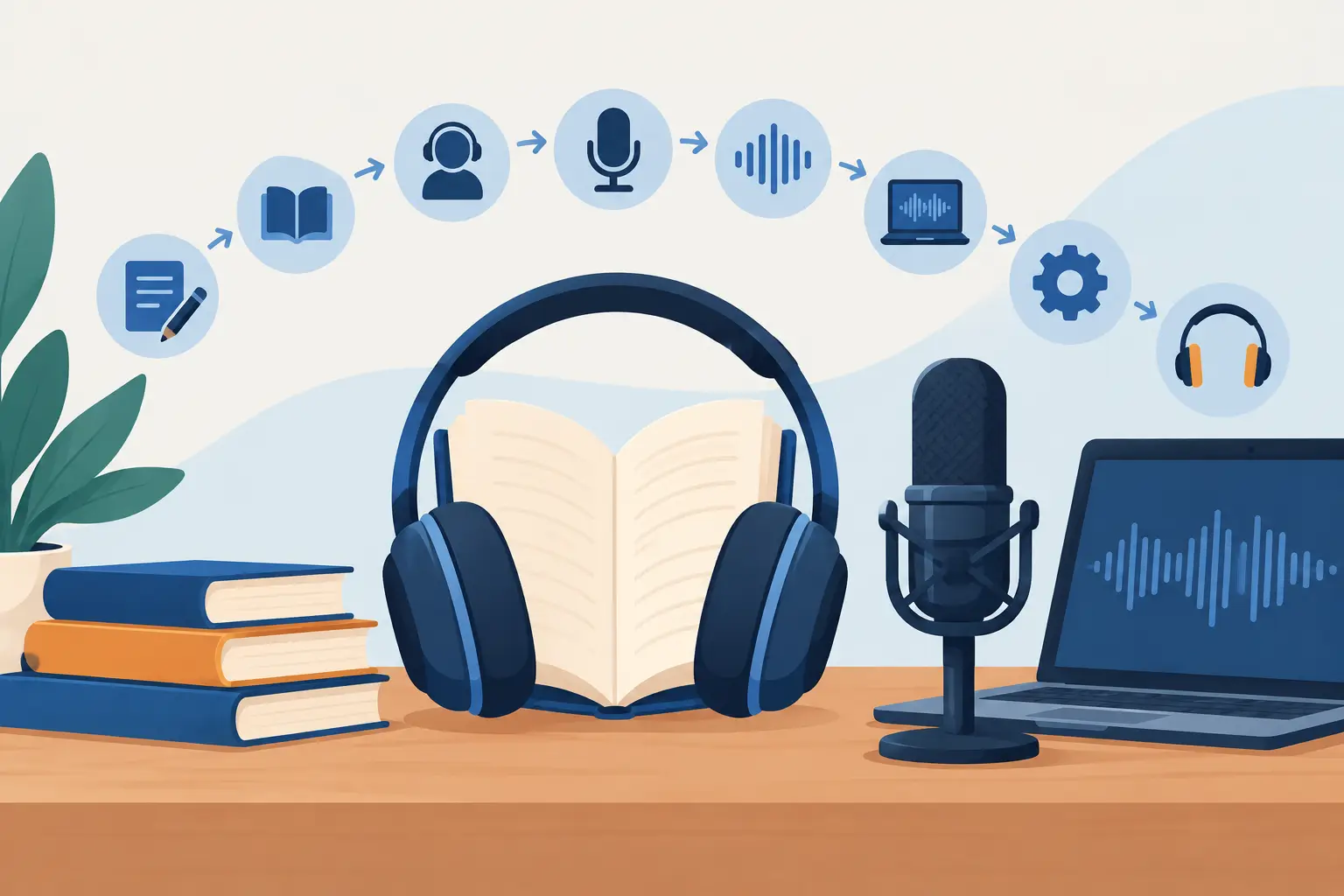
A novel can be finished on the page and still be unready for audio. A repeated phrase that reads as intentional may sound distracting. A chapter break may need a beat, not silence. A minor character with three lines may need to be recast before the first recording session, not after it. This novel audiobook preproduction guide is built for the work that protects your story before narration, sound design, and mastering begin.
Audiobook preproduction is not administrative cleanup. It is where an author and production team establish what the listener should hear, how the story should move, and which choices must remain consistent across every finished file. Skipping it can make production appear faster at first, but revisions become more expensive once voices, timing, and mixes are in motion.
1. Freeze the manuscript you intend to produce
Start with the same discipline used for a print-ready PDF or validated EPUB: establish a controlled source file. Your audiobook script should come from the final editorial manuscript, not a draft with unresolved copyedits, alternate scenes, or placeholder text.
Confirm the edition first. If you are releasing print, ebook, and audio near the same date, compare the final files line by line where necessary. Small differences matter. A revised character name, an added epilogue, or a corrected date can create confusion for listeners and complicate retailer metadata later.
This does not mean a manuscript can never change after audio production begins. It means every change needs a clear decision path. If a revision affects only a word, the fix may be simple. If it changes a scene's emotional direction, character continuity, or running time, it needs to be evaluated as a production change rather than silently inserted.
2. Convert prose into an editable production script
A manuscript is written for readers' eyes. A production script is prepared for performance. The words may be identical, but the working document needs additional structure so narration can be accurate, reviewable, and repeatable.
Mark chapter titles, scene transitions, epigraphs, letters, text messages, quoted material, and any content that changes the delivery style. Identify pronunciation-sensitive names, invented places, foreign-language phrases, technical terms, and abbreviations. If a word has more than one accepted pronunciation, choose the one that belongs in your world and document it.
Dialogue deserves special attention. A narrator needs to know who is speaking, particularly in fast exchanges or scenes with several characters. Add discreet speaker labels or production notes where attribution is unclear. Do not rewrite your novel into a stage play. The goal is to preserve the reading experience while removing avoidable guesswork in the booth.
Build a pronunciation and continuity sheet
Your continuity sheet should be concise enough to use during production and detailed enough to prevent drift. Include phonetic pronunciations, character relationships, accents or regional influences, recurring vocal traits, timeline notes, and any intentional changes in a character's age or condition.
Avoid vague direction such as "make her sound mysterious." Give the production team playable choices instead: measured pace, low energy, guarded delivery, or a light Midwest influence. A voice is more reliable when it is defined by clear performance parameters rather than an abstract mood.
3. Decide what narration style serves the novel
The central preproduction question is not, "Can this book have multiple voices?" It is, "What approach gives the listener the clearest and most compelling experience?"
A single narrator can create a highly unified performance, especially for close first-person fiction, memoir, literary work, and novels with a strong internal voice. Dual narration can work well when alternating points of view are structurally central. A fuller character-cast approach can be effective for dialogue-driven genre fiction, but it requires tighter continuity control and can increase review time.
There is no automatic premium option. More voices are not always better. Every added performer introduces scheduling, tonal, and editorial considerations. Choose the format that reinforces the book's point of view, pacing, and emotional scale.
4. Cast for character function, not novelty
Casting is where many audiobook plans either become specific or stay generic. Start with the narrator's role in the story. Are they carrying intimate interiority, sharp comic timing, a broad world of supporting characters, or an authoritative nonfiction voice? Then consider vocal range, pace, clarity, emotional control, and fit with the book's audience.
For multi-voice productions, separate principal roles from supporting roles. Major recurring characters need distinct, sustainable vocal identities. A character who appears in one early chapter may not need an elaborate profile, but they still need continuity if they return later.
Author involvement is especially valuable here. You know which character is masking fear, which sibling is older, and which apparent villain should sound almost disarmingly calm. Put those insights into the casting brief before auditions or voice selection, rather than trying to correct the performance after recording.
5. Map pace, transitions, and listening fatigue
Listeners experience time differently than readers. A dense paragraph can be reread on a page; in audio, it has to land on the first pass. Preproduction is the right time to flag sections that need careful pacing, such as long exposition, action sequences, emotional revelations, or complicated timeline shifts.
Review chapter openings and endings closely. These are natural points for listener orientation and momentum. Determine whether a scene break requires a short pause, a chapter transition, a musical cue, or no added treatment at all. Restraint usually wins. Audio should clarify the story, not decorate every moment.
Also consider total runtime. A long novel may need production planning around volume breaks, recurring opening and closing credits, or consistent chapter treatment. Runtime affects budget, scheduling, file delivery, and the listener's sense of pacing, so estimate it before recording begins.
6. Define a selective sound design plan
Sound design can create atmosphere, establish place, and make key transitions more cinematic. It can also date quickly or compete with the narration when applied without purpose. The answer depends on genre, narrative distance, and the role sound plays in the reader's imagination.
Create a cue plan for only the moments that earn it. You may want a restrained ambient bed for a prologue, a recurring tonal transition between timelines, or a brief environmental cue that grounds a major scene change. Record the intended purpose of each cue, its approximate placement, and whether it should sit beneath narration or stand alone.
Do not use sound to solve a script problem that should be solved in the performance. If a scene's tension relies on pacing, silence may be more effective than a dramatic effect. The strongest audiobook productions make sound feel inevitable, not added afterward.
7. Set review rules before production starts
A defined review process protects both quality and schedule. Decide who has approval authority, how notes will be collected, and what counts as a revision. Without those boundaries, feedback can become contradictory: one person requests a slower pace while another asks for more urgency, and the production team has no final direction.
A practical review package includes the approved production script, pronunciation sheet, casting decisions, sound cue plan, reference samples, and a version-control convention. Keep all notes tied to chapter, timestamp, and requested change. "Chapter 12 feels off" is difficult to act on. "At 08:14, use the approved pronunciation for Marais" is actionable.
For series authors, preserve these materials as production assets. A series voice bible, pronunciation archive, and prior performance references reduce setup time on the next title while keeping the listener experience consistent across the catalog.
8. Plan mastering and retailer packaging early
Preproduction should account for the end of the workflow, not stop at recording. Retail-ready audiobook files need consistent technical treatment, chapter organization, opening and closing credits, metadata alignment, and quality control. A clean performance can still fail commercially if files are poorly organized or packaged inconsistently.
Confirm your intended distribution requirements before the mix is finalized. Your chapter structure, naming conventions, retail description, contributor credits, and cover assets should agree across formats. This is particularly useful for teams releasing a print edition, ebook, and audiobook together, where a mismatch can create customer confusion and unnecessary support work.
An end-to-end platform such as Orpheus can keep script preparation, casting, production decisions, and final delivery connected rather than scattered across documents, contractors, and audio folders. The value is not automation for its own sake. It is a controlled workflow where the author can make creative decisions early enough for those decisions to matter.
A well-prepared audiobook begins long before the first line is performed. Give your novel a production script that answers the hard questions, preserve a clear record of your decisions, and leave room for performance where performance belongs. That is how the finished audio arrives as a deliberate edition of the book, not simply text read aloud.
Last updated October 17, 2026
← All posts