What Is Audiobook Mastering? A Production Guide
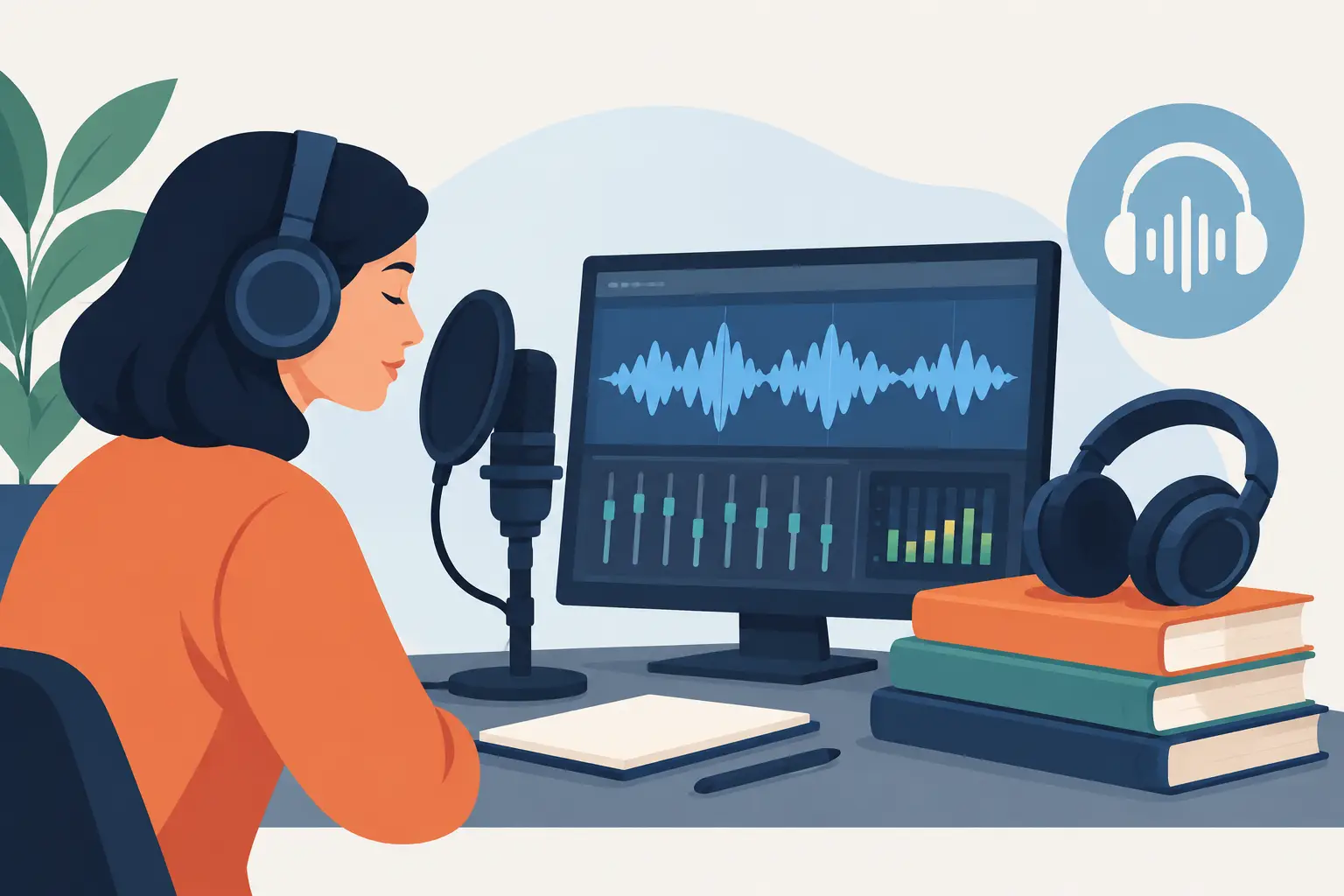
A listener may never think about what is audiobook mastering, but they will hear when it has been skipped. Sudden shifts in volume, distracting mouth noise, harsh sibilance, or an opening chapter that sounds noticeably different from the ending can pull attention away from the book itself. Mastering is the final production stage that makes an audiobook feel intentional, consistent, and ready for commercial distribution.
For independent authors, mastering is not a cosmetic polish applied after the real work is done. It is the quality-control layer between a completed mix and the files delivered to retailers. It protects the listening experience across headphones, car speakers, smart speakers, and the many playback systems your audience actually uses.
What is audiobook mastering?
Audiobook mastering is the process of preparing final mixed audio for release. An audio engineer or production system evaluates the completed chapters, applies final adjustments for consistency and technical compliance, and exports files in the format required for distribution.
The goal is not to make every voice sound artificially loud or heavily processed. The goal is controlled, clear, comfortable narration that remains consistent from chapter to chapter. That means managing perceived loudness, peak levels, noise floor, tonal balance, spacing, and file specifications without changing the narrator's performance or the author's intended atmosphere.
A mastered audiobook should feel stable. Listeners should not need to adjust their volume every time a new chapter begins. Quiet passages should remain intelligible, energetic scenes should have impact without distortion, and the narrator's voice should retain its natural character.
Mastering is different from editing and mixing
These production stages work together, but they solve different problems. Confusing them can lead authors to assume a clean recording is automatically ready for retail release.
Editing happens first. This is where production removes mistakes, repeated lines, false starts, unwanted breaths where appropriate, long pauses, page turns, and other distractions. The editor also verifies that the narration follows the approved audiobook script, including any intentional adaptations needed for audio.
Mixing shapes the listening experience. If an audiobook uses selective music, ambience, or sound design, mixing establishes the relationship between those elements and the narration. It may include equalization, compression, de-essing, noise reduction, and automation that help the voice sit clearly in the soundscape.
Mastering comes after the mix is approved. It reviews the audiobook as a complete product rather than a collection of individual recording sessions. A master can reveal that Chapter 14 feels brighter than Chapter 2, that one scene is louder than the rest of the book, or that a chapter's background noise becomes obvious at normal playback volume.
The distinction matters because mastering cannot rescue a weak source recording or compensate for an unapproved script. It can refine and standardize a finished production. It is not a substitute for solid narration, disciplined editing, or a well-built mix.
What happens during audiobook mastering?
The exact process depends on the genre, narration style, recording environment, and distribution plan. A memoir narrated by its author may need a different touch than a multi-character fantasy with subtle environmental sound. Still, a professional mastering workflow typically addresses the same core decisions.
Chapter-to-chapter consistency
Audiobooks are often recorded across multiple days or sessions. A narrator's distance from the microphone can change. Room tone can shift. The vocal energy of a late-night recording may differ from a morning session.
During mastering, engineers compare chapters against a consistent reference. They make measured adjustments so the listener experiences one coherent book, not a patchwork of sessions. Consistency also applies to introductory matter, chapter headings, end matter, and any bonus content.
Loudness, peaks, and dynamic control
Loudness is more complex than simply turning audio up. A file can sound loud while still having peaks that clip or distort. It can also meet a peak target while feeling too quiet compared with adjacent chapters.
Mastering balances average loudness and peak control so narration is easy to hear without becoming fatiguing. Compression and limiting may be used carefully, but overprocessing is a real risk. If every word is pushed to the same intensity, the performance loses contrast and emotion. A thoughtful master preserves natural dynamics while keeping volume predictable for the listener.
Noise floor and room tone
Every recording contains some background sound. The question is whether it becomes distracting during pauses and quiet moments. HVAC systems, computer fans, distant traffic, and inconsistent room tone can become more apparent after other processing is applied.
Mastering checks the final noise floor and smooths transitions where needed. Aggressive noise removal can create metallic artifacts or make a narrator sound unnatural, so the right decision is often selective rather than absolute. Clean, believable audio is better than audio that has been processed past the point of credibility.
Tonal balance and vocal clarity
Tonal balance determines whether a voice feels muddy, thin, boomy, harsh, or clear. A master may make subtle equalization changes that improve intelligibility across common listening devices.
These decisions require restraint. A bright, intimate narrator should not be forced into the same tonal profile as a warm, resonant narrator. The production standard is clarity and comfort, not sameness. The narrator's voice is part of the book's identity.
Technical review and delivery preparation
Before release, each chapter needs a technical check. This includes listening for clicks, digital glitches, abrupt edits, duplicate phrases, missing content, clipped consonants, unintended silence, and other issues that can survive earlier stages.
The final audio is then exported according to the technical requirements of the intended retailer or distributor. Requirements can vary by channel and may change over time, so production teams should verify current specifications before delivery. File naming, chapter order, metadata alignment, and packaging all matter. A properly mastered file that is incorrectly labeled or ordered can still create avoidable distribution problems.
Why mastering matters for author control
Authors retain more creative control when mastering is part of a visible production workflow rather than a black-box final step. You should know which script version was recorded, which narrator and character voices were approved, where sound design appears, and what changes were made after the mix.
That visibility is especially valuable for series authors and small presses. When Book 3 is released a year after Book 1, consistency becomes a brand issue. Listeners notice if familiar character voices change without reason or if the new installment sounds noticeably louder, drier, or more compressed than prior titles.
A controlled workflow also creates a clear approval point. The author or publishing team can review the mastered chapters as a listening experience, not merely as isolated audio files. That is when you catch an overly long pause before a reveal, a chapter heading that is too quiet, or a music cue that competes with a key line.
Mastering for cinematic audiobooks
A straightforward single-narrator audiobook and a cinematic production should not be mastered identically. When ambience, music, or multiple voices are present, the master must preserve narrative focus. The spoken word remains the primary delivery system for the book.
Sound design should add dimension, not create a contest for the listener's attention. A rain bed may establish place, but it cannot obscure dialogue. A transition cue may add momentum, but it should not cause a jarring loudness jump. The master is where those choices are evaluated across the complete arc of the audiobook.
This is also why generic text-to-speech output is not equivalent to audiobook production. Generating a voice file may be fast, but it does not replace script preparation, casting, performance direction, editing, mixing, mastering, quality assurance, and retailer packaging. The work is in the decisions around the audio as much as the audio itself.
A practical mastering checklist before release
Before approving delivery, confirm that the audiobook has been reviewed as a whole and that every chapter is present, correctly ordered, and consistently named. Listen on more than one device, including headphones and an ordinary speaker. Check that the opening and closing chapters match the production quality of the middle of the book.
Also confirm that chapter headings are clear, silences feel intentional, narration remains intelligible in quieter passages, and no music or ambience masks essential text. Finally, verify that the exported files meet the current requirements for your chosen distribution path.
Platforms such as Orpheus are designed to keep these stages connected, from an editable production script and voice casting through mixing, mastering, and retailer-ready packaging. That connected workflow reduces handoffs without removing the author's authority over the final listening experience.
A finished audiobook is ready when the listener can forget the production process and stay with the story. Mastering is what helps make that trust possible, chapter after chapter.
Last updated October 13, 2026
← All posts