How Manuscript Editing Software Supports Production
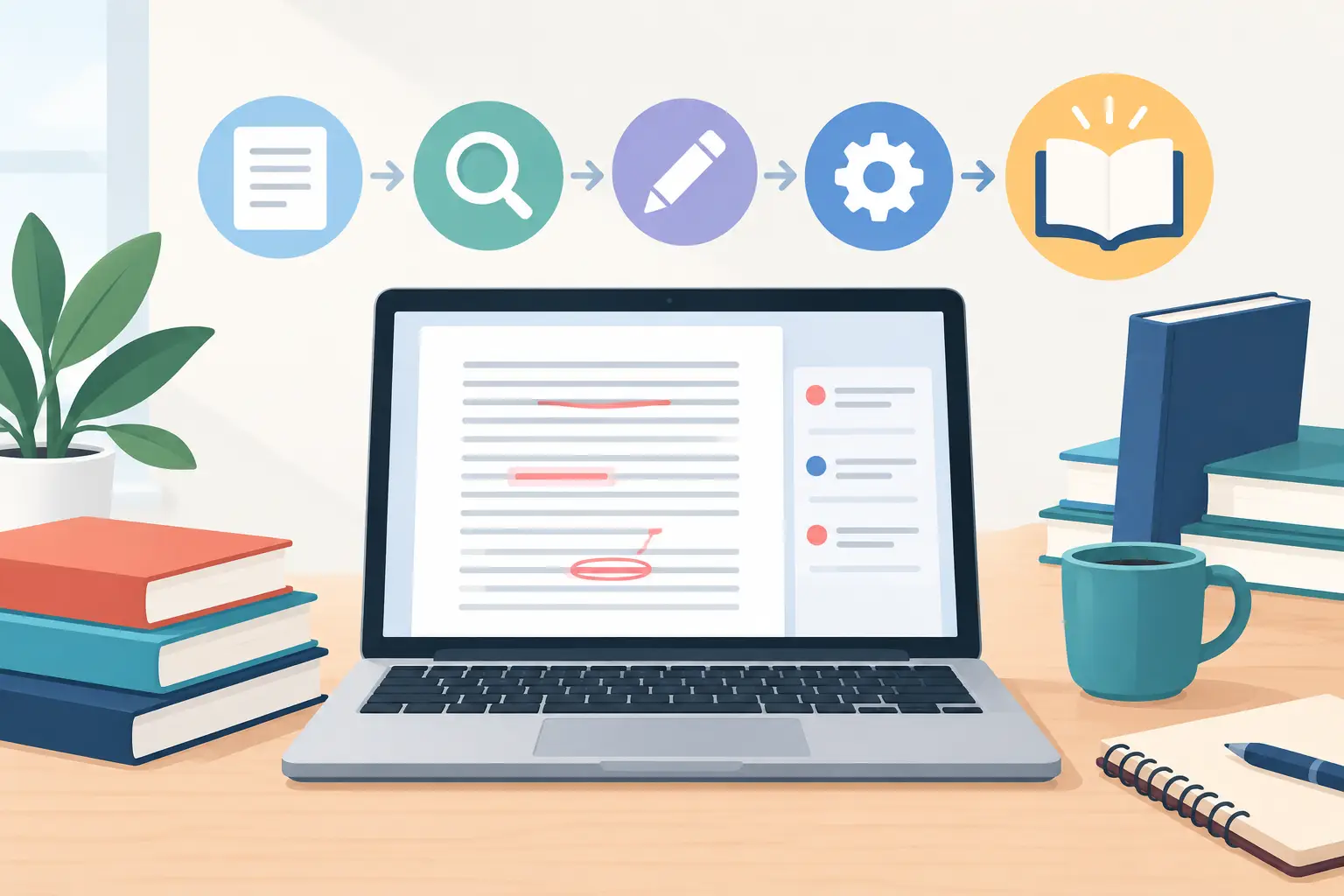
A finished draft is not yet a production file. Before it becomes a paperback interior, validated EPUB, or audiobook script, it needs to be revised, structured, and stabilized without losing the author’s intent. The right manuscript editing software gives authors a controlled place to make those decisions before formatting and distribution make every late change more expensive.
For independent authors and lean publishing teams, the question is not whether software can flag a repeated word or a misplaced comma. It is whether the editing environment supports the full handoff from manuscript to published book. That means preserving clean chapter structure, handling revisions deliberately, and keeping the source manuscript usable across print, ebook, and audio production.
What Manuscript Editing Software Should Actually Do
Many tools marketed for writers focus on the drafting stage. They offer a blank page, word-count goals, and light organization. Those features can be useful while a book is being written, but they do not necessarily prepare a completed manuscript for publication.
Production-ready manuscript editing software needs to help authors work through the final editorial pass while maintaining the structural information that later stages depend on. Chapter breaks, scene divisions, front matter, back matter, images, headings, and special text treatments all affect how a book lays out and how an ebook renders. If those elements are improvised after editing is supposedly complete, errors multiply quickly.
A strong workflow also separates editorial choices from automated suggestions. Grammar and style checks can identify patterns worth reviewing, but they cannot decide the voice of a first-person memoir, the cadence of a thriller, or the intentional repetition in a literary scene. The author should remain the authority. Software should make the manuscript easier to inspect, revise, and prepare, not flatten it into generic prose.
Editing Is the Start of a Production Workflow
The most useful way to evaluate manuscript editing software is to look beyond the edit screen. Ask what happens when the text is approved.
A clean manuscript should move into interior layout without being copied through multiple applications, where chapter labels disappear and formatting becomes inconsistent. It should support print-ready PDF creation for paperback or hardcover interiors. It should also support a validated EPUB, because an ebook that looks acceptable on one device can still fail retailer checks or render badly on another.
Audio adds another layer. A manuscript built for reading is not automatically ready for listening. Chapter titles, scene changes, pronunciation notes, credits, and other spoken elements need review before narration begins. A production system should be able to turn the approved text into an editable script, rather than treating the manuscript as an untouchable block of text fed into a voice engine.
That is why editing belongs at the center of publishing production. It is the point where authors decide what the book says, how it is organized, and what should carry forward into every edition.
The hidden cost of fragmented files
A common independent publishing workflow looks efficient at first: edit in one application, send a file to a formatter, revise a copy in another program, then create a separate document for audio. The trouble appears when a late edit arrives. A changed sentence may need to be corrected in the print layout, EPUB, audiobook script, cover copy, retailer description, and any advance files already shared with reviewers.
Fragmentation does not only create version-control problems. It weakens creative control. When the authoritative manuscript is unclear, authors spend time reconciling files instead of making publishing decisions.
A connected toolset reduces that risk by giving the team a dependable source text and a visible route from revision to final formats. It does not eliminate editorial work. It prevents that work from being lost in handoffs.
Features Worth Prioritizing
The best choice depends on the kind of books you publish and the size of your operation. A novelist producing a series may care most about consistent chapter architecture and revision speed. A nonfiction author may need reliable handling for headings, notes, tables, and image placement. A small press needs repeatable standards across several titles.
Still, a few capabilities matter in nearly every publishing workflow:
- Structured manuscript organization: Chapters and front matter should be easy to review, reorder, and carry into layout without manual reconstruction.
- Revision control: You need a clear way to make, review, and finalize changes, especially when an editor, proofreader, or coauthor is involved.
- Format-aware output: The system should account for the different requirements of print interiors and reflowable ebooks rather than treating export as an afterthought.
- Production continuity: An approved manuscript should be able to progress into layout and, when needed, audiobook script preparation without repeated file conversion.
These are not flashy features. They are the features that protect a release schedule when the final proof reveals a missing paragraph or a last-minute endorsement changes the front matter.
What Software Cannot Replace
Manuscript editing software can organize the work, identify potential issues, and make revisions easier to manage. It cannot replace developmental editing, line editing, copyediting, or proofreading when those services are needed.
Each editorial stage solves a different problem. Developmental editing examines the book’s big-picture structure, argument, pacing, and reader experience. Line editing focuses on clarity and style at the sentence level. Copyediting addresses correctness and consistency. Proofreading is the final inspection after the book has been laid out.
Trying to use software as a substitute for professional judgment creates predictable problems. A tool may flag an unconventional sentence that is working perfectly, while missing a continuity error that only a careful human reader will catch. The practical goal is not to automate taste. It is to give the author and editorial team a cleaner, more accountable environment for applying it.
A Better Manuscript-to-Market Process
Start by establishing one approved source manuscript. Before layout begins, resolve tracked changes, confirm chapter order, standardize headings, and identify any text that requires special treatment. This includes epigraphs, lists, quoted material, image captions, footnotes, acknowledgments, and reading-group questions.
Next, review the book in the format it is intended to become. Print layout reveals issues that a word processor hides, including awkward page breaks, heading placement, and crowded pages. Ebook review exposes different concerns, such as inconsistent spacing, broken navigation, and image behavior on smaller screens. The source text should support both, but each output deserves its own quality check.
If audio is part of the release plan, prepare it from the approved manuscript, not an outdated draft. Review the text as a script and make explicit decisions about chapter announcements, pronunciation, performance notes, and credits. Narration and character casting should serve the book’s emotional range and audience, while selective sound design should support scenes without competing with the words.
Tunmire’s Forge Live is built around this production logic: authors can move from manuscript editing into interior layout, print-ready PDF creation, and validated EPUB export within the same author-focused publishing stack. The point is not to remove decisions from the process. It is to keep those decisions connected to the file that becomes the book.
How to Choose Without Overbuying
Do not choose manuscript editing software solely because it has the longest feature list. Choose it based on the production bottleneck you face most often.
If your manuscripts are already well edited but formatting is slow and inconsistent, prioritize layout and export reliability. If you work with collaborators, prioritize revision visibility and a clear approval process. If you publish in multiple formats, prioritize continuity from manuscript through print, ebook, and audio preparation. If you only need a private drafting environment, a full production platform may be more than you need.
Also test with a real chapter, not a clean sample document. Use a chapter with dialogue, scene breaks, headings, italics, a list, and any formatting you commonly use. The goal is to see how the software handles the complications that exist in your actual books.
The best manuscript editing software does not make publishing feel automatic. It makes the work more deliberate: one approved text, fewer avoidable handoffs, and a clearer path from the page you wrote to the formats readers will buy, read, and hear.
Last updated October 3, 2026
← All posts