Audiobook Software Built for Real Production
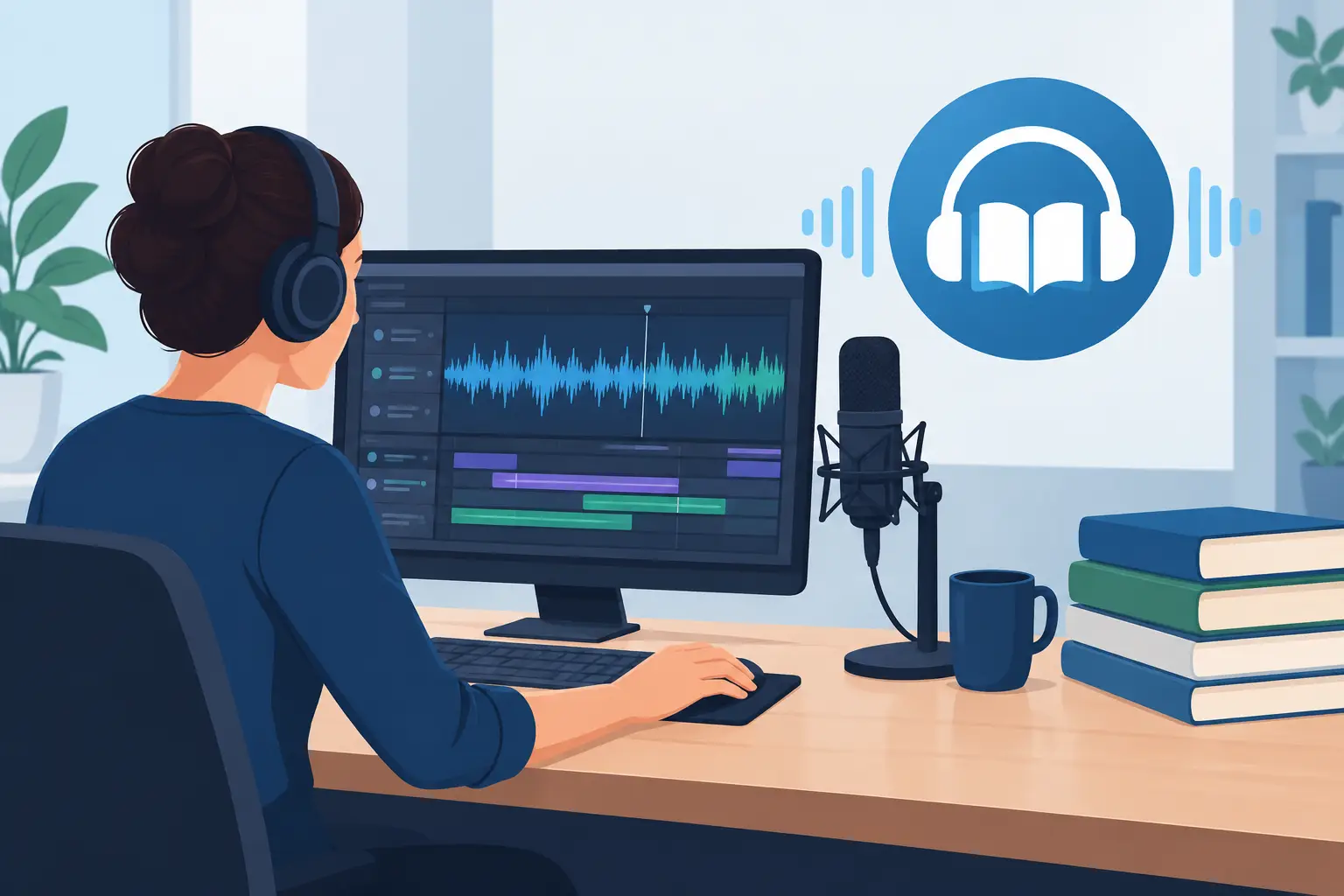
A completed manuscript is not automatically an audiobook. Before a listener hears the first chapter, the book needs to become a production script, a cast needs to be chosen, performances need direction, and every finished file needs to meet technical delivery requirements. The right audiobook software helps authors manage that work without surrendering the creative decisions that make the book worth hearing.
For independent authors and small publishing teams, the question is not simply whether software can turn words into audio. It is whether the platform can support a professional production workflow: one that preserves the manuscript’s intent, gives the author meaningful control over voices and pacing, and produces files ready for commercial distribution.
What Audiobook Software Should Actually Do
Basic text-to-speech tools treat an audiobook as a conversion task. Paste in text, select a voice, generate an audio file. That may be useful for private reference, accessibility drafts, or testing narration pace. It is not enough for a commercial release where character continuity, chapter structure, pronunciation, audio consistency, and listener expectations all matter.
Professional audiobook software should begin with the manuscript and create a usable production path from that source material. The first step is script preparation. A print or ebook manuscript often contains elements that need a deliberate audio treatment: chapter headings, scene breaks, epigraphs, footnotes, tables, image descriptions, front matter, and back matter. Some content should be narrated exactly as written. Some should be adapted for clarity. Some should be omitted. Those are editorial decisions, not formatting accidents.
Once the script is prepared, the platform should support casting and voice assignment. A memoir may need one narrator whose voice carries authority and intimacy. A multi-POV romance may need distinct leads. A fantasy series may require a broader character plan that can remain consistent across several books. The best workflow allows the author or producer to make those choices deliberately, review them in context, and revise before the entire book is produced.
The finished audio also needs production discipline. Narration must be edited for errors and continuity, mixed with any selected ambience or sound design, mastered to consistent listening levels, and packaged correctly for retailer submission. An MP3 file alone is not necessarily a publishable audiobook.
Start With an Editable Production Script
The production script is the control center of the audiobook. It should not be a locked export that forces an author to return to the original manuscript for every correction. It should be an editable working document built for listening.
A strong script workflow makes it possible to flag uncertain pronunciations, identify character dialogue, mark scene changes, clarify foreign-language passages, and decide how nonstandard text will be voiced. For nonfiction, this may include deciding how to handle citations, URLs, charts, and sidebar material. For fiction, it may mean catching a character’s verbal tic, a repeated phrase, or a reveal that depends on a specific pause.
This stage is where authors protect their work from generic output. If the text has a line break designed to create tension, the audio needs a comparable moment. If a chapter title contains information the listener needs, it should be included. If an endnote would interrupt the listening experience, it may need to be moved or handled differently. Audiobook software should make these decisions visible and editable before production advances.
Script changes should be traceable
A useful platform keeps the script, narration choices, and production status connected. When a late manuscript correction changes a name or a sentence, the author should be able to identify the affected section instead of searching through an entire finished recording. This matters especially for series authors and publishers maintaining backlists, where one small continuity change can affect several titles.
Casting Is More Than Selecting a Pleasant Voice
Listeners notice casting immediately. A technically clean voice that does not fit the book can still make the audiobook feel wrong. The narrator’s age range, cadence, emotional range, genre fit, and ability to distinguish characters all shape the experience.
Audiobook software should support casting as a creative process, not a drop-down menu. Authors need a way to hear voices against actual passages from the book, particularly scenes with dialogue, emotional turns, technical vocabulary, or contrasting points of view. A sample from a quiet opening paragraph cannot tell you whether a voice can carry a tense argument in Chapter 18.
For books with multiple characters, selective voice casting can add clarity without turning the project into a novelty performance. Not every character needs a separate voice. In many books, a primary narrator with thoughtful character treatment is the right choice. In others, distinct cast voices may improve comprehension and immersion. The decision depends on genre, length, budget, audience expectations, and the role audio plays in the overall release strategy.
The author should retain approval authority throughout. A production platform can make casting faster and more organized, but it should not decide what the protagonist sounds like or flatten a memoirist’s personal voice into a generic delivery.
Use Sound Design With Restraint
Sound design can strengthen an audiobook, but it can also age badly, distract from the text, or create delivery complications. The goal is not to add effects because the software makes them available. The goal is to use sound when it serves the story.
A subtle room tone, environmental ambience, chapter transition, or brief musical cue may establish place and mood. In cinematic fiction, selective sound can heighten a scene without competing with narration. In practical nonfiction, sound design may be unnecessary beyond clean transitions and a polished master. The production approach should follow the book, not a preset.
Audiobook software built for serious publishing should make sound design intentional and reviewable. Authors need to hear how an effect sits beneath the narration, how it carries across headphones and speakers, and whether it remains appropriate over the full duration of a book. More layers do not equal higher quality. Clear storytelling does.
Do Not Treat Mastering and Packaging as Afterthoughts
A listener may never know the technical specifications behind a finished audiobook, but they will notice inconsistent volume, harsh sibilance, abrupt edits, long silences, or a chapter file that begins in the wrong place. These are production issues, and they affect reviews.
Mastering creates a consistent listening experience across the project. It balances levels, helps maintain intelligibility, and prepares the audio for the environments where listeners actually consume books: cars, earbuds, smart speakers, and phones. Quality control should also check chapter order, file naming, opening and closing credits, duplicated lines, missing passages, and retailer-specific requirements.
Retailer packaging is the final operational step. Different distribution channels may have specific expectations for file structure, metadata, cover assets, and audio specifications. A workflow that ends with properly organized, retailer-ready audio saves authors from last-minute technical rework and avoids delays at release time.
Build Audio Into the Publishing Workflow Earlier
The most efficient audiobook projects do not begin after every other format is finished and the launch date is already fixed. Audio considerations should enter the workflow while the manuscript is being finalized. That does not mean locking every production choice early. It means identifying potential issues before they become expensive: complicated pronunciation, multiple narrators, rights-sensitive lyrics, unusual formatting, dense tables, or a planned simultaneous release.
For authors producing print, ebook, and audio editions, connected tools reduce avoidable fragmentation. The manuscript used for interior layout and validated EPUB creation can also serve as the foundation for a controlled audio script. Tunmire’s Orpheus is designed around this production model, moving from manuscript to editable script, casting, selective sound design, mastering, and retailer-packaged deliverables.
That integrated approach is especially useful for teams managing a series or a growing backlist. Consistent terminology, recurring character voices, and reusable production decisions become assets rather than details trapped in emails, spreadsheets, and disconnected vendor folders.
Choose Software Based on the Release You Want
The right audiobook software depends on the book and the standard you intend to meet. A short instructional title may need clean, direct narration and fast delivery. A literary novel may require careful performance direction and minimal sound. A genre series may benefit from a repeatable cast plan and strong continuity controls. There is no single production formula.
What should remain consistent is author authority. You should be able to review the script, make casting decisions, approve the creative treatment, and receive audio that is ready for a real audience. Software can accelerate production, organize complex tasks, and reduce the friction of making audio. It should not reduce your book to a one-click voice file.
Treat the audiobook as another edition of your work, with its own craft, production standards, and commercial potential. When the workflow gives you control at the moments that matter, the finished audio can sound like it belongs beside the print and ebook editions you worked so hard to publish.
Last updated September 18, 2026
← All posts