Audiobook Studio Versus Remote Production Compared
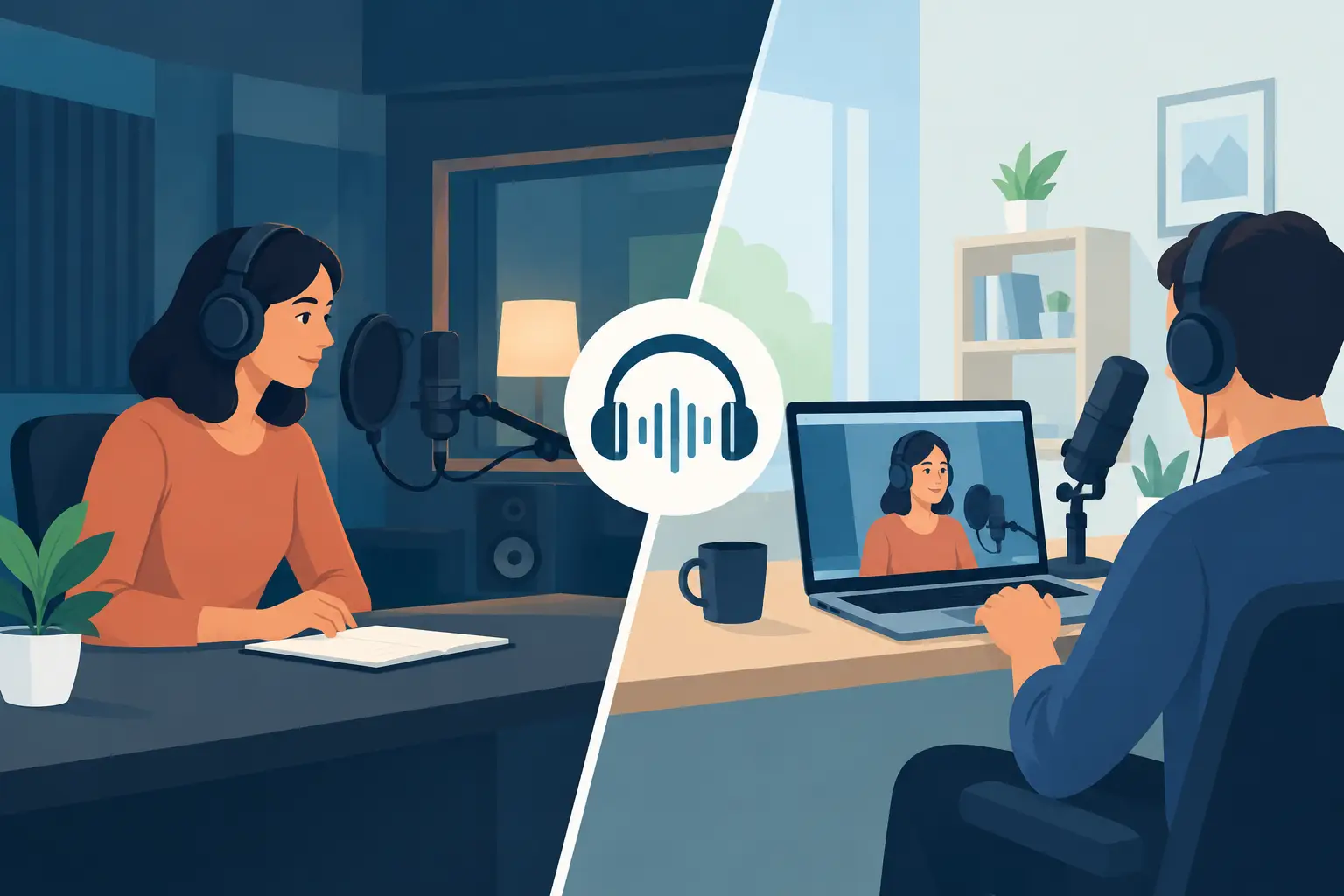
A narrator misses the emotional turn at the end of Chapter 12. In a traditional studio session, fixing it may mean checking availability, booking another block, coordinating an engineer, and paying for more room time. In a well-run remote workflow, it may mean a targeted pickup request with clear script notes and a defined approval path. That practical difference is at the center of audiobook studio versus remote production.
Neither model automatically produces a better audiobook. A studio can deliver extraordinary work, but it can also add expense and scheduling friction that do not improve the final listen. Remote production can move quickly and preserve author access, but only when it is built as a real production system rather than a folder of raw audio files and scattered emails.
For independent authors and lean publishing teams, the right choice comes down to the book, the performance, the budget, and the level of control you need from script preparation through retailer packaging.
Audiobook Studio Versus Remote Production: The Real Difference
A studio is a physical production environment. The narrator, director, and engineer may work in the same room, using professionally treated acoustics and a consistent signal chain. This can be valuable when a performance needs active, moment-by-moment direction, when multiple performers must interact naturally, or when the project has a larger sound-design requirement.
Remote production separates the participants while preserving a defined production process. Narrators record from qualified home studios or regional facilities. Producers review sound, manage pickups, coordinate editing, and maintain consistency across chapters. The author can review casting and performance checkpoints without traveling or being present for every recorded page.
The meaningful distinction is not location alone. It is whether the workflow protects the manuscript, performance, technical standards, and approvals at every stage. A remote audiobook made with unvetted voices, inconsistent recording environments, and no mastering plan will sound remote in the worst sense. A remotely managed production with casting standards, edited scripts, quality control, and mastering can meet commercial expectations without requiring everyone to share a booth.
When a Physical Studio Earns Its Cost
A conventional studio can be the best fit for performance-heavy books. Full-cast fiction, comedy with tight timing, dialogue-intensive drama, and projects featuring live musical elements can benefit from performers responding to each other in real time. An experienced director in the room can shape pacing, pronunciation, character separation, and emotional continuity before small issues become expensive fixes.
Studios also make sense when the narrator does not have access to a professionally treated recording space. High-quality narration is not simply about owning a good microphone. Room reflections, background noise, microphone technique, gain staging, and monitoring all affect whether a recording can be edited and mastered cleanly. A studio removes many of those variables.
But authors should distinguish between paying for a studio and paying for production quality. Studio time is only one input. You still need an approved audiobook script, a casting decision that serves the book, editorial review, clean editing, mastering, and files prepared to retailer specifications. A premium room does not correct weak casting or a manuscript that changed after recording began.
The financial model can be less forgiving, too. Studio production often ties cost to time blocks, which makes lengthy books, late script changes, and additional pickups harder to predict. For authors producing a series or converting a backlist, those costs can compound quickly.
Where Remote Production Has the Advantage
Remote production is built for flexibility. It expands the available talent pool beyond your city, reduces travel and facility costs, and makes it easier to schedule around a narrator's established recording setup. For a single-narrator novel, memoir, business book, or practical nonfiction title, this can be a significant advantage without compromising listener experience.
It also supports author involvement at the points where it matters most. You can approve a narrator based on auditions, review how character voices are handled, provide a pronunciation guide, and sign off on sample chapters before the entire book is recorded. Those decisions have more impact on the final audiobook than sitting in a studio for every session.
Remote work is especially effective when the manuscript is treated as a production script rather than handed over as a final document with no further preparation. The script should identify chapter structure, scene breaks, abbreviations, foreign language, names, timeline shifts, notes that should not be narrated, and any pronunciation or performance guidance. This reduces avoidable retakes and gives the narrator a reliable map of the book.
For recurring releases, a remote model can also create continuity. The same narrator, character notes, pronunciation decisions, sound profile, and approval process can carry across a series. That consistency matters to listeners, particularly in genre fiction where character identity and familiar performance choices help hold a catalog together.
Quality Depends on the Production Controls
The fear around remote recording is understandable. Authors have heard audiobook samples with room noise, uneven volume, exaggerated synthetic delivery, or abrupt edits between chapters. Those are not inherent flaws of remote production. They are signs of inadequate quality control.
A credible remote workflow begins before narration. The manuscript is converted into an editable script so production notes do not live in a separate, error-prone document. Casting is intentional, with attention to genre, vocal age, accent requirements, pacing, and the narrator's ability to maintain character distinctions over the full runtime.
During recording, each chapter must be reviewed for performance and technical consistency. Afterward, editing removes mistakes and distracting mouth noise while preserving a natural performance. Mastering brings loudness, peaks, and tonal balance into alignment across the full title. The finished audio then needs correct chapter segmentation, opening and closing credits where required, metadata, and retailer-ready packaging.
That sequence is why basic text-to-speech tools are not a substitute for audiobook production. Generating a voice file is not the same as directing a performance, making creative choices, correcting delivery, or preparing a professional release. Automation can accelerate parts of a workflow, but it should not eliminate the author's ability to approve the elements listeners will actually hear.
Cost, Speed, and Revisions: Ask Better Questions
Do not choose between studio and remote production based on a single rate. Ask what is included, what triggers additional charges, and who owns each decision.
A studio quote may include an engineer but exclude editing, mastering, pickups, or distribution-ready files. A remote quote may appear lower but rely on the author to manage the script, coordinate feedback, or identify technical problems. The useful comparison is the total cost of a finished, approved audiobook, not the cost of an hour in a room or a chapter recorded at home.
Speed has similar trade-offs. A studio can move rapidly when everyone is available and decisions are immediate. Remote production can be faster when it eliminates travel and allows work to progress across locations, but it slows down if feedback is vague or approvals are delayed. Establishing approval gates for casting, script preparation, sample audio, first-pass review, and final masters prevents the project from drifting.
Revisions deserve special attention. Clarify the difference between a narrator error, an approved-script change, and an author preference change. If a narrator misreads a line, that is a production correction. If you revise a paragraph after narration begins, that is a new recording request. Clear version control protects the budget and keeps everyone working from the same manuscript.
Choosing the Right Model for Your Book
Choose a physical studio when the project depends on live ensemble performance, close real-time direction, or a narrator who needs a controlled facility. Choose remote production when you want broader casting options, efficient scheduling, lower logistical overhead, and structured access to creative approvals.
For many independent publishers, the strongest answer is not an ideological choice between the two. It is a production standard that can be applied wherever recording happens. A platform such as Orpheus is designed around that standard: script preparation, casting, controlled creative decisions, selective sound design, editing, mastering, and retailer packaging in one author-centered workflow.
Your audiobook should not feel like an afterthought created after the print and ebook files are finished. Give it the same deliberate production decisions as the cover, interior layout, and final manuscript. Listeners can hear the difference when a book has been made with intention.
Last updated October 19, 2026
← All posts