Turning Your Book Into an Audiobook: A Workflow for Authors
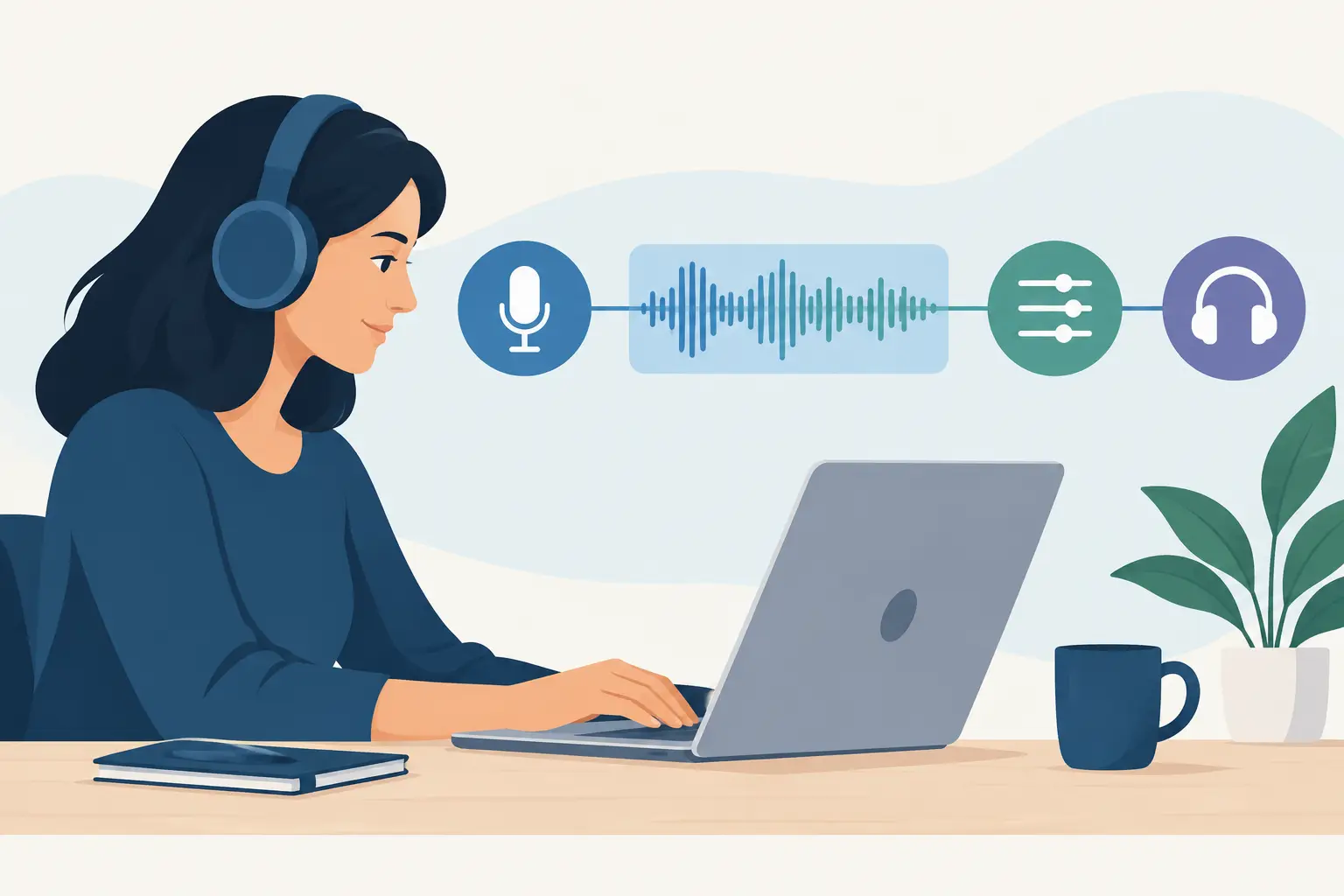
A finished, edited manuscript is not automatically ready for audio. Turning it into an audiobook takes more than a quick text-to-speech pass - it takes clear decisions from script preparation through casting, sound design, mastering, and retailer packaging. Those are the stages that decide whether a listener stays immersed or stops listening.
As the author, you don't need to run every piece of production equipment yourself. What matters is keeping authority over the creative choices that define your book: what gets voiced, how characters are told apart, which passages need rewording for the ear, and what the finished audio actually sounds like.
Why Audio Isn't Just a File Conversion
A print-ready PDF and a validated EPUB preserve your text for reading. Audio has a different job: it turns prose into time, performance, pacing, and atmosphere. A sentence that reads beautifully on the page can sound repetitive out loud. A chapter break may need a cleaner pause. A minor character with only a few lines can still need a real casting decision if their presence changes how a scene lands.
This is why fast, generic narration tools create a predictable problem. They produce audio quickly, but speed doesn't answer the real production questions. Who checks pronunciation? Where do scene transitions go? Is a line interior thought, dialogue, or narration? Does the opening set the right tone for the whole book? Without someone owning those calls, the files may work technically but feel thin creatively.
A documented process - manuscript to approved script to approved listening experience - keeps you in the loop without turning you into an audio engineer.
Start With an Editable Production Script
Your manuscript is the source. The production script is the working document.
Before casting or narration begins, convert the text into a script you can review and adjust for performance. This is where you flag pronunciations, mark recurring characters, note accents or delivery, and highlight passages needing deliberate pacing. If you're writing nonfiction, confirm names, acronyms, citations, and technical terms here. If you're writing fiction, settle character notes early, before a voice choice is hard to undo.
The goal isn't to rewrite your book for audio - it's to remove ambiguity before it surfaces mid-production. Script review often turns up real manuscript issues too: a duplicated phrase, a missing transition, dialogue that's unclear without a paragraph break, or a chapter heading that needs to be spoken differently than it's written.
Keep one approved version of the script. Not a manuscript in a word processor plus notes in email plus corrections in a message thread. Once narration starts, changes should be visible, attributable, and limited to what the release actually needs - reopening approved chapters constantly protects neither quality nor schedule.
Decide What Actually Needs Your Attention
Not every line needs the same scrutiny. A straightforward business book may just need careful pronunciation checks and one consistent narrator, with little or no sound design. A fantasy series may need a bigger character map, recurring voice assignments, pronunciation rules, and continuity checks across multiple books.
The right amount of production depends on your genre, your audience, and how audio fits your catalog. Automate the repeatable work where it helps. Keep your own judgment on anything that changes how the listener experiences the book.
Cast for the Whole Book, Not a Demo Clip
Casting is where your control matters most. A compelling sample voice isn't automatically right for an eight-hour memoir, a first-person thriller, or a practical leadership book - the choice has to hold up across the entire runtime.
Weigh casting against your book's point of view, emotional range, audience, and series potential. In romance or character-driven fiction, voice distinction and emotional restraint can matter more than theatrical intensity. In nonfiction, credibility and ease of listening often matter most. For a series, ask whether this voice can stay consistent as the world, cast, and stakes grow.
Approve the main narration approach before full production starts, and test more than one polished paragraph. Listen to ordinary exposition, dialogue, emotional turns, names, and hard phrasing. A voice that shines in a dramatic excerpt can get tiring across explanatory chapters, while a restrained read may be exactly right for a dense nonfiction book.
Apply the same discipline to character voices. Distinction doesn't mean exaggeration - the best casting helps listeners follow the story without turning every supporting character into a performance piece. Consistency usually beats novelty.
Use Sound Design Selectively
Sound design can add scale, mood, and cinematic energy - or distract from the writing if used as a blanket effect. The question isn't whether your book should have ambience. It's whether a sound element makes a scene clearer, more emotional, or more memorable without competing with the narration.
A sparse thriller may benefit from restrained transitions or a touch of environmental texture. A historical novel may use brief ambience to set a scene. A business book often does best with clean narration and little else. Memoir can land anywhere on that spectrum, depending on how closely the production ties to memory, place, and voice.
Selective sound design also protects the listener. Effects should support narration, not force someone to adjust volume, lose a sentence, or wait through an unnecessary transition. Every addition adds a mixing job: balancing levels, keeping continuity, and making sure the book stays clear on headphones, car speakers, and small devices.
Build Review Points Into Your Workflow
The most expensive mistakes are the ones caught after mastering. Build review gates into the process so you can still act on feedback efficiently.
- Approve the production script first.
- Approve casting and performance direction.
- Listen to an early narrated section to test the approach under real conditions.
- Run chapter-level quality control for pronunciation, pacing, continuity, and script adherence before final mix.
Keep each gate focused. Script approval is for text and performance guidance. Casting approval is for voice fit. Final review is for release readiness, not a new round of developmental editing. Open-ended review at every stage will stall your release - clear boundaries let you keep real authority without losing momentum, which matters even more if you're converting a backlist or releasing a series.
Treat Mastering and Packaging as Part of the Release
Narration isn't the last step. Mixed and mastered audio needs checking for level consistency, clean edits, intelligibility, and a coherent sound from chapter to chapter. An audiobook with sharp volume swings or audible mistakes can hurt a launch as fast as a flawed cover or a broken ebook file.
Retailer packaging needs the same care. Chapters need accurate names and order, opening and closing credits need to be correct, and the final files need to be organized for wherever the audiobook will sell. This isn't cleanup - it's the production stage that turns approved audio into a product people can actually buy.
Orpheus is built around this whole path: turning a manuscript into an editable production script, supporting narration and character casting - a single narrator or a full cast with sound effects, chosen by ear - and carrying approved audio through mastering to retailer-ready files.
Keep the Audiobook Recognizably Yours
A professional audiobook shouldn't sound like a manuscript read by a machine or a production stitched together from disconnected handoffs. It should carry the same intent as your print and ebook editions, translated for listening with the care that format needs.
Give your audio a clear source manuscript, an approved script, deliberate casting, disciplined review points, and a real technical standard at the end. That structure gives you speed without asking you to give up the voice of your book.
Last updated November 16, 2026
← All posts